05 December 2024
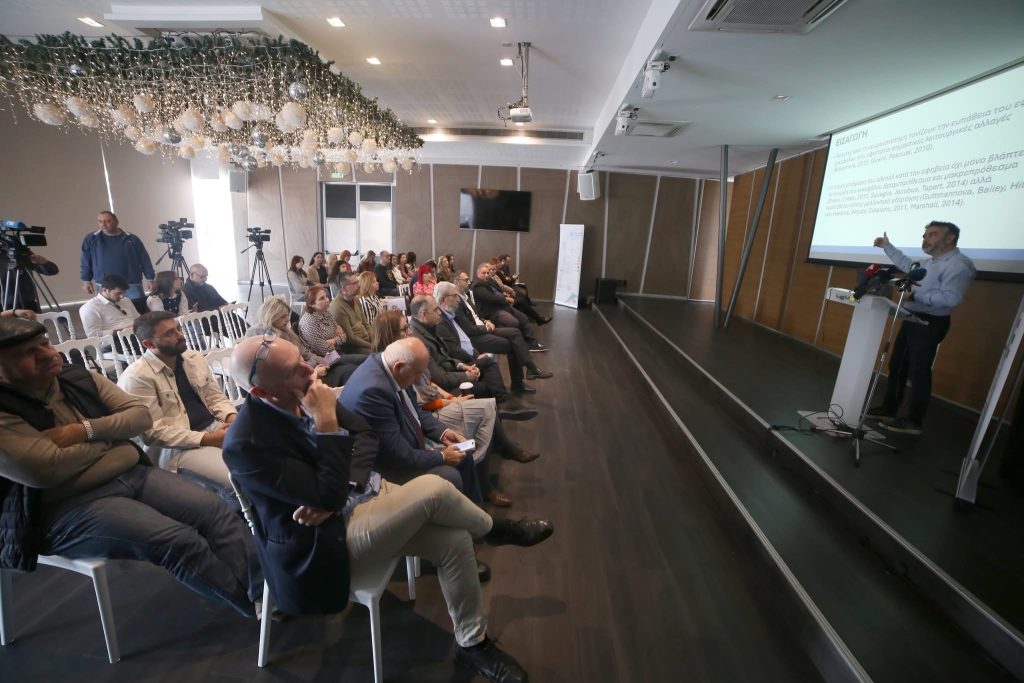
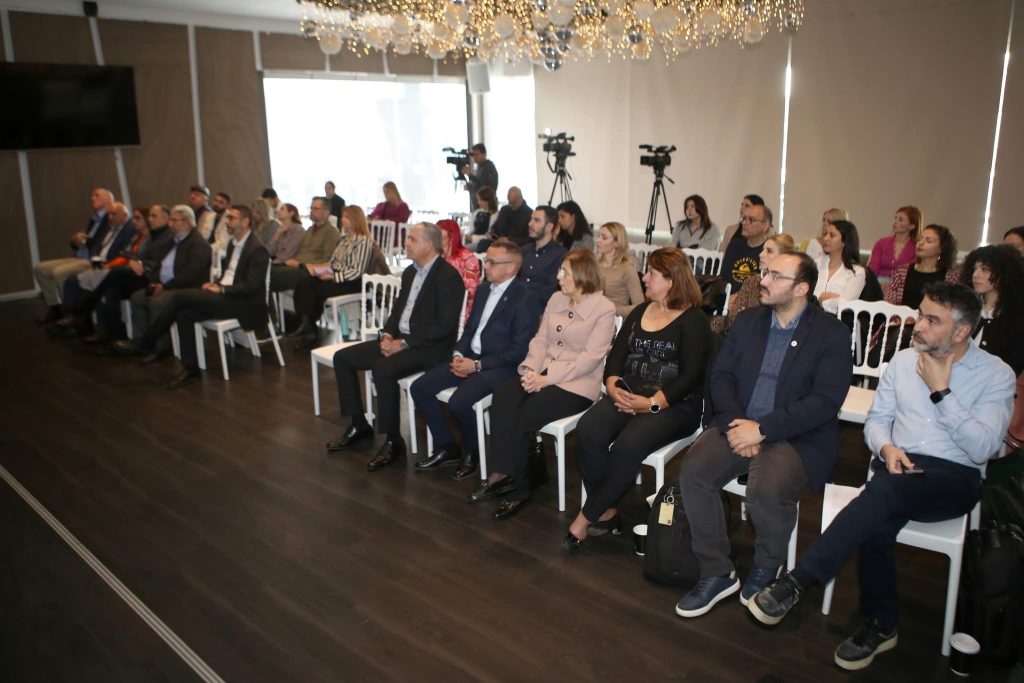
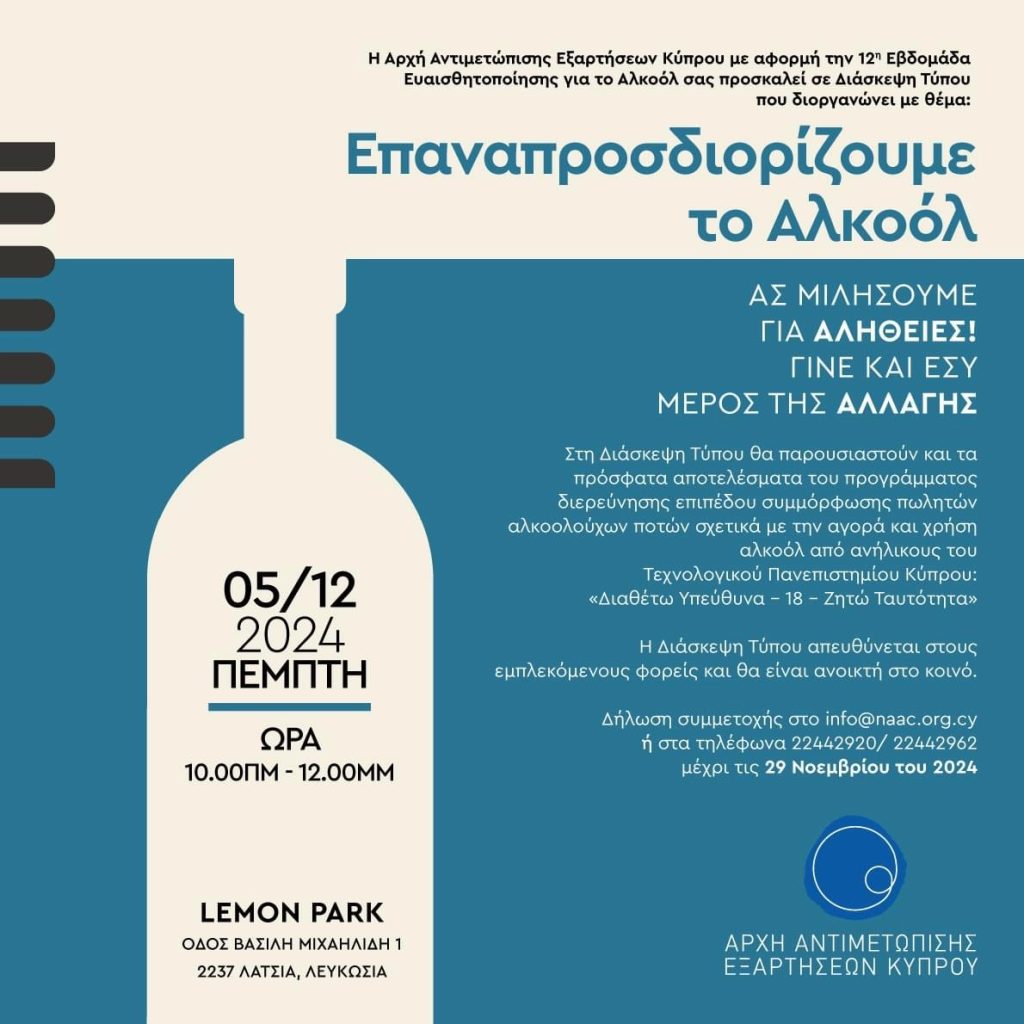
The Cyprus National Addiction Authority (NAAC) organized a press conference on the theme “Redefining Alcohol”, on 5 December 2024, as part of the 12th Alcohol Awareness Week (AWW).
This year’s the theme is “Redefining Alcohol”, which, in addition to a message adopted by NAAC from the World Health Organization (WHO), urges the public to take action, think about their relationship with alcohol, learn more about the health risks associated with alcohol, and consider the benefits that can be gained from consuming less or no alcohol.
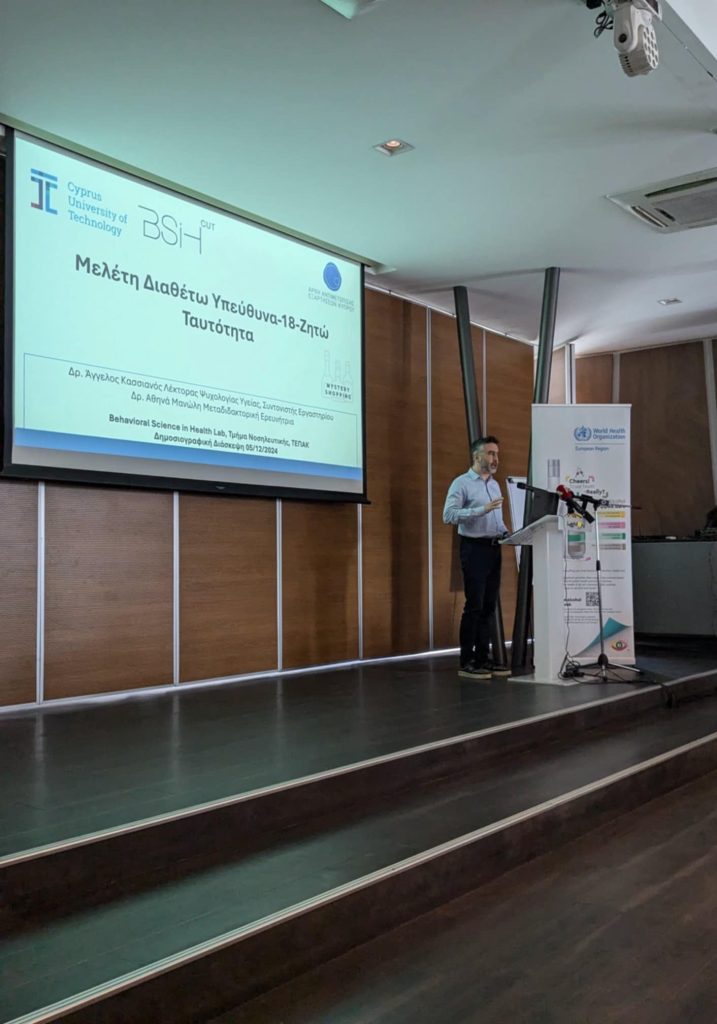
During the press conference, BSiH Lsb Director presented the results of the Mystrery Shopping study coordinated by Dr Athina Manoli and which provided some useful insights into the access of alcohol in Cyprus for underaged individuals.
More specifically the results revealed low vendor compliance with the law. 85.5% of vendors indicated an intention to sell alcoholic beverages without asking the visitors’ age, while 13.5% only asked for verbal confirmation. Only 1% of vendors asked for official identification. Only 5% of premises had visible warning signs prohibiting the sale of alcohol to minors, while no premises had a license to sell alcohol posted in a visible place.
Important factors influencing vendor behavior included the gender of the visitor and the type of premises. Specifically, female visitors were approximately 10 times more likely to be asked for identification, while vendors in bars were approximately 7 times more likely to ask for identification compared to those in kiosks.
From the answers to the questions regarding the legislation on the sale of alcoholic beverages, it was found that 90% of the sellers were aware of the age limit for the sale of alcohol, while 10% stated that they were not informed. The main sources of information mainly included the sellers’ pre-existing knowledge (63%), while 27% reported that they were informed by the person in charge of the premises. In addition, 9% stated that they had no source of information, either official or unofficial. Regarding the frequency of information, 78% of the sellers stated that they do not receive any regular information, while 11% stated that they had been informed only once, when they started working. Regarding the last time they received information, 69% of the sellers stated that they had never been officially informed. At the same time, 15% stated that they had been informed when they started working, while the remaining 16% referred to various other instances of information, such as information they received years ago or through occasional information.
Overall, the study revealed serious gaps in both the implementation of legislation on the protection of minors from access to alcoholic beverages and in access issues.